
Indian cooking involves high heat, spices like haldi, and deep frying, which combine to create a challenging kitchen environment. Oily vapors rise from the pan and settle on countertops, tiles, and stovetops. If this residue is not addressed immediately, it cools and hardens into a thick, sticky layer that ordinary sponges cannot pierce. Removing this baked on grease requires an abrasive tool that cuts through the grime without ruining the underlying kitchen surfaces.
Why Kitchen Grease Becomes Hard to Shift
When cooking oil splashes onto a hot surface, it undergoes a chemical change that makes it highly adhesive. As dust and soot join this sticky layer, it forms a dark, resilient crust. Standard foam sponges simply glide over this buildup or tear apart against the friction. At the same time, using harsh steel wool can leave deep scratches on stainless steel hobs and glazed tiles, creating tiny crevices where fresh bacteria and grease can hide.
Preparing the Stained Surface
Do not begin by scrubbing a completely dry stain. Apply a solution of concentrated dishwashing liquid and warm water directly to the greasy area. Let this mixture rest on the surface for two to three minutes. The heat and soap will begin to emulsify the hardened oil, breaking its bond with the surface and reducing the physical effort needed later.
The Correct Scrubbing Technique with Gala Super Scrub
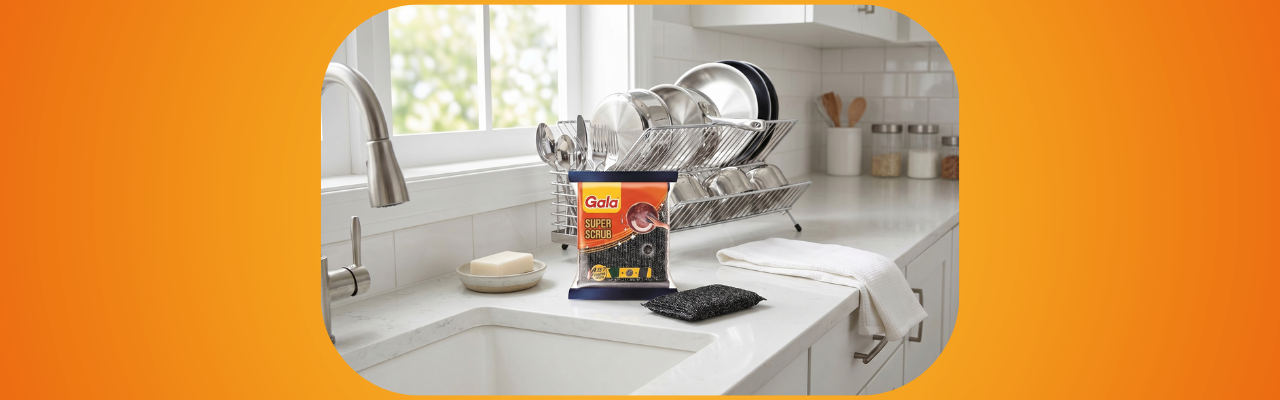
The Gala Super Scrub is engineered specifically to bridge the gap between heavy scrubbing power and surface safety. It features a high quality absorption sponge encased in a network of stainless steel loops. Wet the Gala Super Scrub and apply a few drops of dishwash gel directly to it. Squeeze to generate a thick foam. Hold the scrub flat against the surface and apply firm, circular pressure. The steel loops lift the crusty residue mechanically, while the inner sponge holds the soapy water to flush the dirt away continuously.
Pay Extra Attention to Hidden Spots
Concentrate your efforts on the tile joints directly behind the cooktop, the underside of the kitchen chimney or exhaust hood, and the crevices around the sink taps. These areas collect the highest density of oil vapors and hard water splashes, making them prime spots for stubborn stains and bacterial growth.
Finish with a Clean Wipe
Once the Gala Super Scrub has broken down the crust, do not allow the dirty slurry to dry back onto the surface. Immediately wipe down the entire area with a damp Gala microfiber cloth or a clean kitchen wipe. This removes the suspended grease and soap residue, leaving behind a clean, matte finish.
How Often Should You Do This
Perform a quick wipe down of your stovetop after every cooking session. For a deeper, targeted scrub of the tiles, countertops, and hob area using the Gala Super Scrub, schedule maintenance twice a week. This routine keeps your kitchen hygienic and prevents heavy grease accumulation. Discover the full utility of the Gala Super Scrub and other Gala kitchen essentials by exploring the complete Gala catalog.